Notes from pilots, builds and the odd late night in a data hall.
Privacy · 4 min read
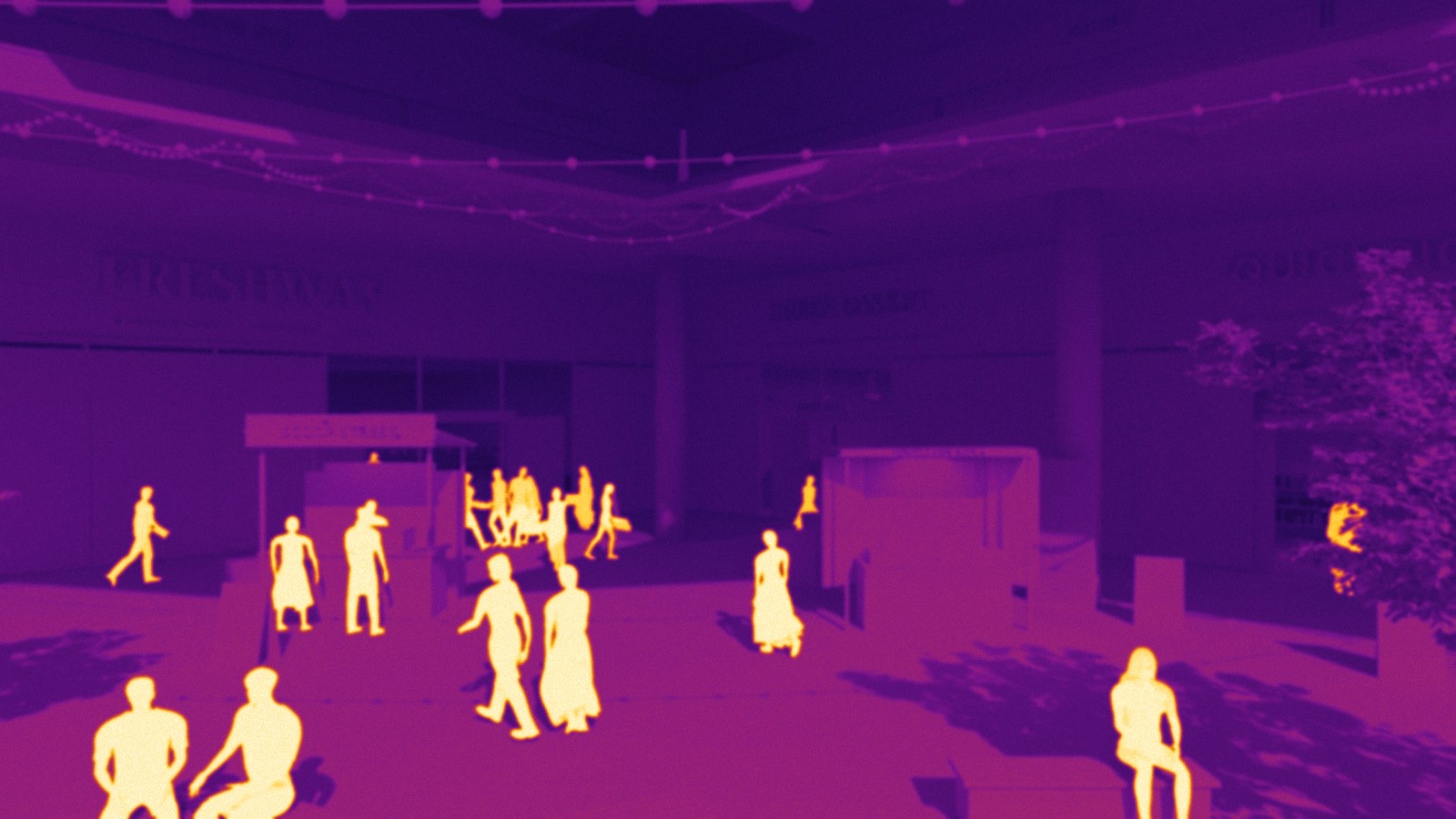
We count heat, not faces.
Most buildings that want to know how many people are in a room reach for a camera. Cameras are cheap, and software can count heads. But a camera records everything else too: who it was, what they were wearing, who they were with. Once that footage exists, someone has to look after it.
SURDS Thermal looks at the room through a 32 × 24 thermal array. That is 768 temperatures, refreshed a few times a second. A person shows up as a warm blob a few pixels wide. There is no face in that data to begin with, so there is nothing to blur, crop or delete later.
The question a building asks is "how many, and where?" Heat answers that. It can't answer "who?", and that's the point.
What it's good at
Counting people in a meeting room, noticing a queue forming at a kiosk, spotting a rack running warmer than its neighbours across an aisle. For rooms where someone sits very still for a long time, like a bedroom or a study, we pair it with the Radar Pod, which notices breathing-level movement.
What leaves the sensor
Counts, positions on a coarse grid and temperatures. Rules run on the sensor and on the hub in the building, so most decisions never need the raw frames to leave the room at all.
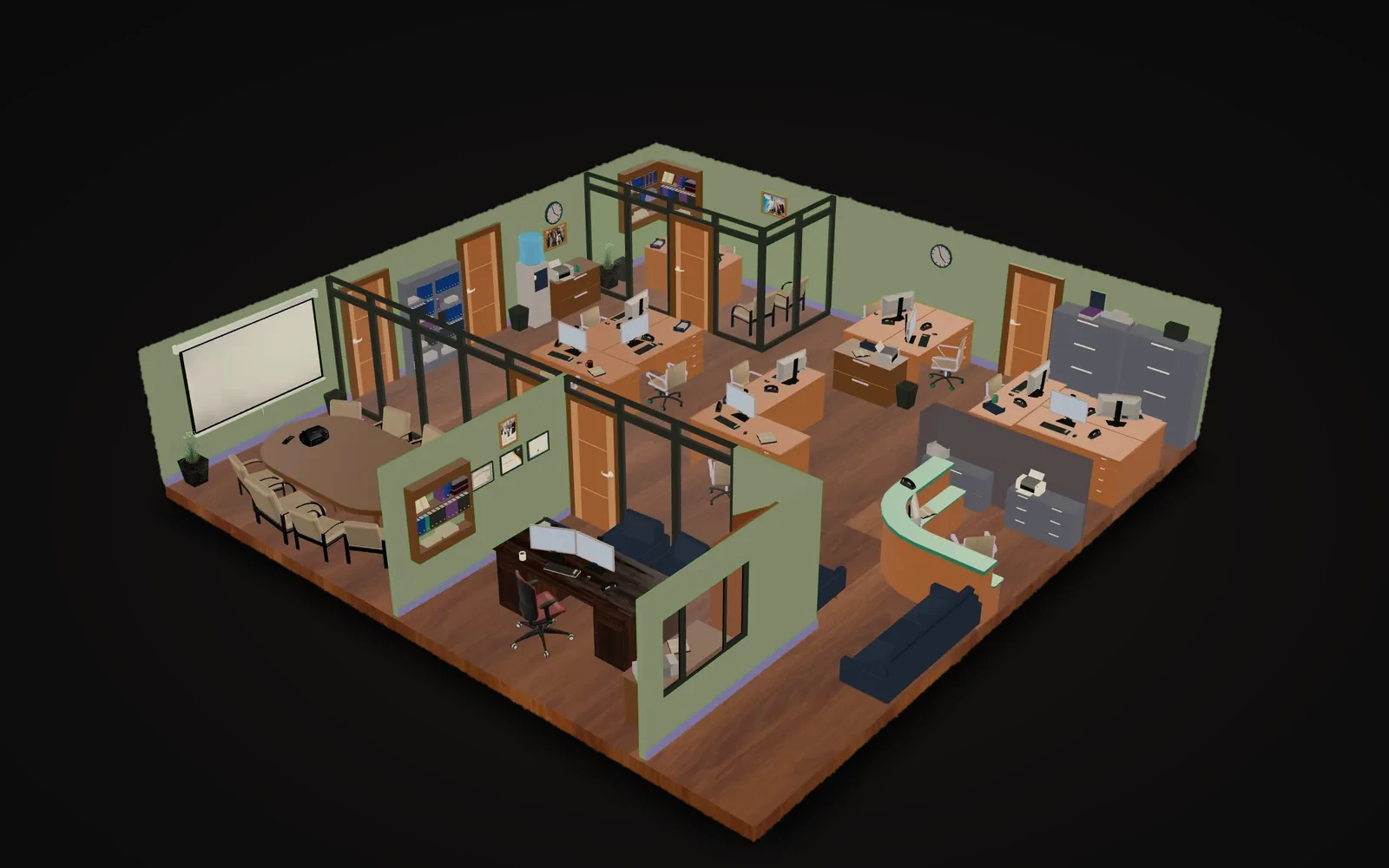
Walk through any office at eight in the evening. Meeting rooms are empty and cold. The AC was set for a ten o'clock meeting and nobody turned it off. Heating, ventilation and cooling is commonly put at around 40% of a building's energy, and a good part of it cools air nobody is breathing.
The fix isn't a new chiller. It's one rule:
When Meeting Room 2 is empty for 15 minutes, turn the AC off.
How it actually happens
A thermal sensor or a Radar Pod says the room is empty. SURDS Pulse, a small IR controller stuck to the wall, sends the off code from that AC's own remote. It learned those codes once during setup. Every time the rule fires, the dashboard logs why: which room, how long it had been empty, what it sent.
Why the log matters
Facilities teams don't trust automation they can't explain. "The AC went off at 18:42 because the room had been empty for 15 minutes" is something you can check against the calendar, and argue with if it's wrong. That's how a rule earns the right to run on its own.
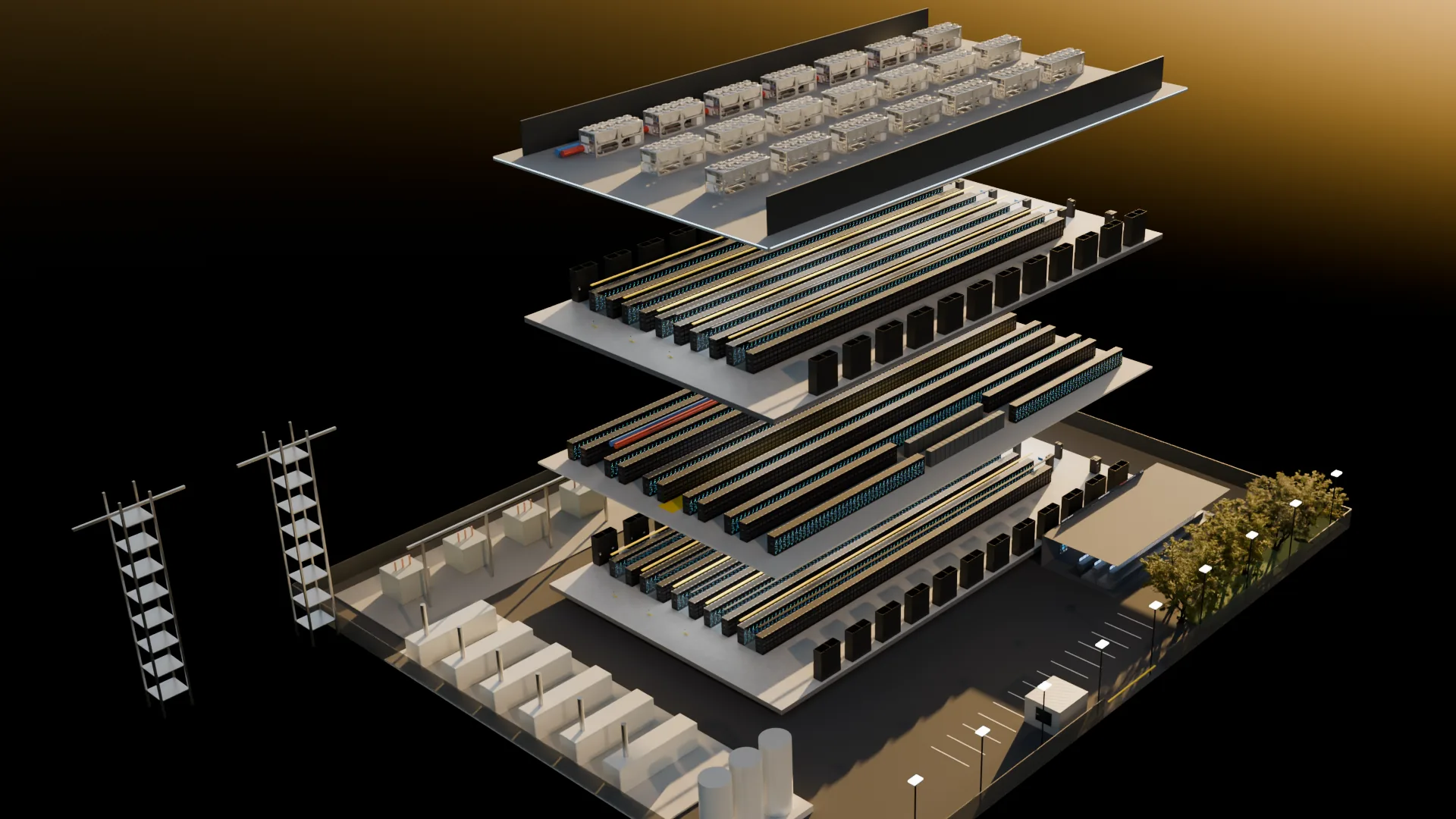
For our films we needed a data centre that looked like a real one, so we built DC-1 in Blender from manufacturers' own equipment models: rack cabinets, cooling units, UPS, switchboards and chillers. Then we filled three floors with it.
The ground floor is a data hall: 890 racks in sealed cold aisles, with cooling units along both walls. The middle floor holds the plant (two chillers, UPS, switchboards and battery strings) and every free metre around them is more racks. The top floor is a second hall, right under the 21 dry coolers on the roof.
Building it made one thing obvious: almost every watt that goes in comes out as heat, and it has to be carried up and out, all day.
Where the sensors go
Heat at the rack inlets, current on the UPS and switchboards, vibration on the generators in the yard, and people in the aisles. One wireless mesh, one live view. You can walk through it yourself, floor by floor.